
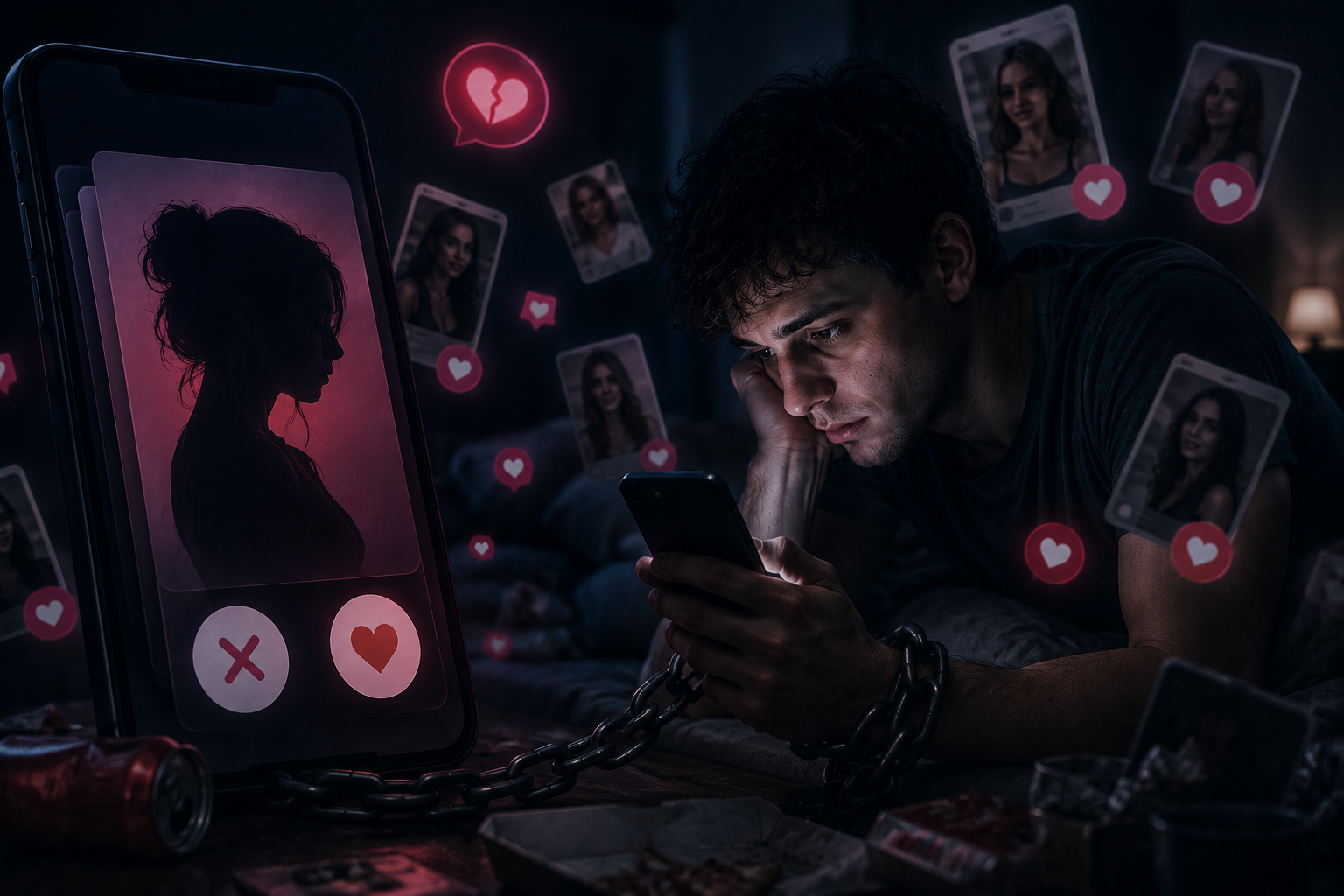
Swipe right, match, text, ghost. If this loop has taken over your daily life, it might be time to take a step back.
Nearly 40% of American adults have used a dating app at some point, and among active users, the average person checks their app multiple times per day — often without any conscious intention to do so. What starts as a hopeful search for connection can quietly become one of the hardest digital habits to break.
Apps like Tinder, Bumble, Hinge, and Grindr are built by teams of engineers whose sole job is to keep you engaged as long as possible. Variable reward schedules, push notifications, and endless profile queues are not accidental — they are the product. Understanding this is the first step toward using these tools on your own terms.
1. Set a daily time limit and stick to it
The most effective way to regain control is to decide in advance when and for how long you will use dating apps — and then treat that window like a commitment. Twenty to thirty minutes a day is more than enough to check messages and browse new profiles. Everything beyond that tends to be compulsive scrolling rather than genuine connection-seeking.
Both iPhone and Android make this easy. Screen Time on iOS and Digital Wellbeing on Android let you set hard daily limits per app. Once the timer runs out, the app locks itself. It feels uncomfortable at first, and that discomfort is exactly the point.
Practical tip: Schedule your dating app window for a specific time — say, 7 to 7:30 PM — rather than leaving it open-ended. Structured use is far easier to maintain than vague intentions to “use it less.”
2. Turn off all notifications
Every ping, badge, and banner is a tiny engineered interrupt designed to pull you back in. Dating apps are among the most aggressive notification senders on any phone, and each alert triggers the same anticipatory anxiety as a slot machine spin: is this the match that changes everything?
Turning off notifications does not mean missing out. It means reclaiming the right to check the app when you choose, rather than being summoned by it. Most matches will still be there an hour later. The urgency is manufactured.
Practical tip: Go beyond silencing sounds — disable badge icons too. An unread count sitting on your home screen is a low-grade psychological nudge that adds up over the course of a day.
3. Prioritize real-world interaction
One of the subtler harms of heavy dating app use is that it can masquerade as social activity. You are texting, flirting, and investing emotionally — but none of it is grounded in physical presence. Over time, this can erode your tolerance for the uncertainty and vulnerability that real-world connection requires.
In the United States, where social isolation has become a documented public health concern, leaning back into in-person interaction matters more than ever. Community events, hobby groups, fitness classes, church communities, volunteer organizations — these are not just alternatives to apps, they are the environment where lasting relationships are most naturally built.
Practical tip: If you have been messaging someone for more than a week without suggesting a meeting, ask yourself honestly whether the conversation is going anywhere — or whether the digital back-and-forth has become a comfortable substitute for the real thing.
4. Replace the habit with something intentional
Compulsive app use rarely happens in a vacuum. It tends to fill gaps: the commute, the commercial break, the moment before sleep, the ten minutes of boredom between tasks. The habit is not really about dating — it is about what the phone has become in those gaps.
The most effective replacement strategy is not willpower, it is substitution. When you feel the pull to open the app outside your designated window, replace it with something specific: a short walk, a page of a book, a few minutes of a podcast, a text to a friend you have been meaning to catch up with.
Practical tip: Leave a physical object — a book, a journal, a pair of earbuds — next to wherever you usually reach for your phone. Making the alternative slightly more accessible than the habit lowers the activation energy enough to matter.
5. Get honest about what you are actually looking for
A significant amount of dating app anxiety in the US comes not from the apps themselves but from the mismatch between what someone says they want and what they are actually seeking. Using Tinder while secretly hoping for a serious relationship, or staying on Hinge out of inertia when you are not emotionally ready to date — both create a kind of low-grade friction that fuels compulsive, joyless use.
Before opening any app, it is worth sitting with a simple question: what do I actually want right now? A committed relationship, something casual, companionship, distraction, validation? None of these answers is wrong, but not knowing which one drives you makes every interaction harder to navigate.
Practical tip: Write your honest answer on paper, not in a notes app. Revisit it every couple of weeks. Your needs change, and your relationship with these tools should change with them.
6. Know which app fits your current goals
Not all dating apps are designed the same way, and some are significantly more likely to encourage compulsive use than others. Choosing the right platform for where you actually are in life is a practical act of self-awareness.
Tinder
Built around volume and speed. The swipe mechanic is explicitly modeled on behavioral psychology principles, and the near-random reward of a match creates a feedback loop similar to casual gambling. Best suited for users who have a clear, casual intention and strong habits around limited use. High risk of compulsive scrolling.
Hinge
Designed with the explicit goal of facilitating real dates rather than endless browsing. Profiles require more thoughtful engagement, and the interface naturally slows the experience down. A better fit for people seeking something serious and trying to use apps more mindfully.
Bumble
Women send the first message, which adds a layer of intentionality to the process and reduces the volume of low-effort interactions. The 24-hour match expiration window also creates a natural cutoff that discourages passive accumulation of matches you never intend to pursue.
Grindr and niche apps
Community-specific platforms tend to have clearer user expectations, which can reduce some of the ambiguity that drives anxious overuse — but they are not inherently less addictive. The same principles of limited use and notification management apply.
7. Seek professional support when the habit becomes harmful
If dating app use is generating genuine distress — chronic anxiety around matches and rejections, a compulsive need to check that disrupts work or sleep, a pattern of emotional investment in digital strangers that leaves you depleted — that is worth taking seriously as a mental health concern, not just a bad habit.
Cognitive behavioral therapy has strong evidence behind it for treating compulsive digital behaviors. Therapists who specialize in technology and relationships are increasingly common in the US. Telehealth platforms like BetterHelp, Talkspace, and Alma connect users with licensed therapists quickly and affordably. For those without insurance or with limited budgets, Open Path Collective offers reduced-rate sessions, and community mental health centers provide sliding-scale options in most cities.
Practical tip: If you are not ready for therapy, SAMHSA’s National Helpline (1-800-662-4357) offers free, confidential support and referrals around behavioral health concerns, including compulsive digital use.
A final thought
Breaking a dating app habit does not mean swearing off the technology forever. It means learning to use it with intention rather than compulsion — as a tool that serves your actual goals, not a backdrop that runs constantly in the background of your life. The most meaningful connections, whether found online or off, still require the same thing they always have: presence, honesty, and a willingness to show up in real life. No algorithm delivers that part for you.
3 comentários em “7 Strategies to Overcome Dating App Addiction”