
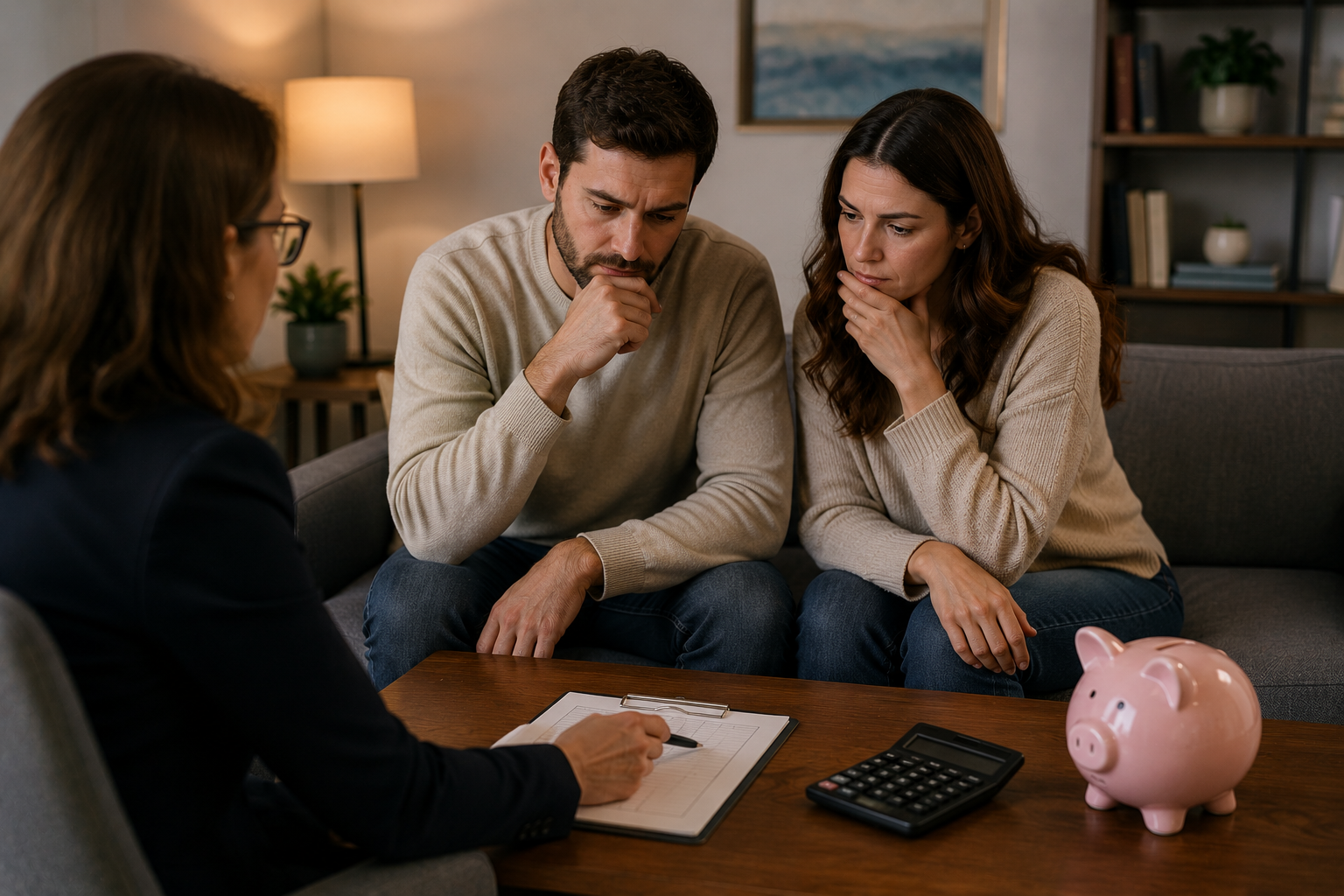
Last updated: May 2026 | Reading time: ~15 minutes
You have finally decided to try couples therapy. Maybe the same argument has played out one too many times. Maybe the silence between you has stretched longer than you can explain. Maybe you are not in crisis at all — you just want to be more intentional about the relationship you are building together. Whatever brought you here, the next question almost always sounds the same: How much is this actually going to cost us?
The honest answer is that it depends on more factors than most guides admit. But the more complete answer — the one that actually helps you make a decision — covers the full spectrum of what you will pay out of pocket, why insurance usually does not help, and what your real options are if the standard rates feel out of reach.
This guide breaks all of it down for 2026, with current pricing, state-by-state context, and every legitimate path to making therapy more affordable.
The National Average: What Most Couples Pay Per Session
Across the United States, the typical marriage counseling cost per session falls between $100 and $200. However, prices vary significantly based on therapist credentials, geographic region, and whether you use insurance or sliding-scale fees.
If you are looking for a single working number to build your budget around, $150 per session is a reasonable middle-of-the-road estimate for a standard 50-minute session with a licensed therapist in a mid-sized American city in 2026.
At the lower end, you will find therapists-in-training, community mental health clinics, and online platforms. At the higher end, you will find highly credentialed specialists in major metro areas — particularly those trained in structured approaches like Emotionally Focused Therapy (EFT) or the Gottman Method.
Without insurance, couples therapy typically costs between $150 and $300 or more per session. And because most couples need more than one or two appointments, the total cost over a course of treatment matters just as much as the per-session rate.
Most couples need 12 to 20 therapy sessions to address their issues. At an average of $100 a session, marriage counseling without insurance costs about $1,200 to $2,000. At the $150 to $200 range, that same course of treatment runs $1,800 to $4,000.
Why Insurance Usually Does Not Cover Marriage Counseling
Before we go further, it helps to understand why you are likely paying out of pocket in the first place — because it is not arbitrary, and knowing the reason gives you a path to work around it.
Most insurance plans do not cover marriage counseling because it is not considered a medical necessity. Insurance companies tend to focus on diagnosed mental health conditions rather than relationship issues. Under laws like the Affordable Care Act and the Mental Health Parity Act, insurance providers are required to treat mental health care the same way they treat physical health care — but these laws apply only when there is a diagnosed mental health condition involved. Most of the time, couples therapy is about improving communication, resolving conflicts, or rebuilding trust. Those are all incredibly important, but they do not count as medical conditions, so they usually do not qualify for coverage.
There is, however, a well-known exception. The most common path to getting insurance coverage is when one partner has an individual mental health diagnosis. If one partner has a diagnosis — such as depression, anxiety, post-traumatic stress disorder (PTSD), or adjustment disorder — a therapist may bill the session using CPT code 90847, which is described as “family psychotherapy with patient present.” In this model, one partner is the “identified patient,” and the relationship becomes the therapeutic context for treating that person’s condition.
This approach is legal and not uncommon, but it has real-world implications worth understanding. The diagnosed partner will have a mental health diagnosis in their insurance record, which can potentially affect things like life insurance applications or certain employer-administered benefits in the future. It is worth discussing with your therapist and, if you have concerns, with a benefits advisor before proceeding this route.
Medicare is a notable exception: marriage counseling falls under the category of family counseling and mental health care, so it is covered by Medicare Part B. Medicare Part B covers 80 percent of the cost of couples therapy, but it must be provided by a behavioral health care provider such as a psychiatrist, physician, clinical psychologist, clinical social worker, or nurse specialist.
What Affects the Price: The 6 Key Factors
No two therapists charge the same rate, and no two couples face the same total cost. These are the factors that move the number most significantly.
1. Location, Location, Location
Where you live is often the single largest variable. In major cities like San Francisco, New York, or Los Angeles, experienced therapists who specialize in evidence-based approaches like Emotionally Focused Therapy often charge $250 to $600 per session. That is not a typo. At the high end of major metro markets, couples therapy can cost more than a car payment — per visit.
Therapists in New York, Los Angeles, San Francisco, Boston, and other high-cost metro areas typically charge at the higher end of the range, often $175 to $250 per session. In contrast, suburban and rural areas can run 20 to 30 percent lower than major metro averages, though the tradeoff is often fewer specialists to choose from.
2. Therapist Credentials and Experience
The qualifications of your therapist play a meaningful role in the cost of care. Licensed professionals, such as LMFTs (Licensed Marriage and Family Therapists), LCSWs (Licensed Clinical Social Workers), and LPCs (Licensed Professional Counselors), have specialized training in healthy relationship dynamics, conflict resolution, and communication skills. A therapist with a doctoral degree (Ph.D. or Psy.D.) will typically charge more than one with a master’s degree. A senior therapist with 10+ years of specialized experience in couples work will charge more than a newly licensed clinician.
Specialization also affects price. Therapists trained specifically in structured, evidence-based couples modalities — Gottman Method, EFT, PACT — often command premium rates because those certifications require significant additional training beyond a standard license.
3. Session Format: In-Person vs. Online
Online marriage counseling prices are $50 to $100 per week on average through platform-based services. Private practice therapists who offer virtual sessions, however, often charge the same rate they would for an in-person appointment — because they are charging for their time and expertise, not the room.
The meaningful cost difference between in-person and online therapy comes primarily from platform-based services like Regain, Talkspace, and BetterHelp, which use subscription models rather than per-session billing. As of 2026, Talkspace Couples Therapy starts at $69/week, billed monthly, for unlimited messaging plus one live session per week.
4. Session Frequency and Length
Weekly sessions are standard, but not universal. Some couples see a therapist every two weeks, especially later in treatment when the work has stabilized. Standard sessions run 50 minutes; some therapists offer 80- or 90-minute couples sessions at a higher rate, which can actually be more cost-effective per-hour given how much ground two people need to cover.
5. Therapist Practice Setting
Private practice therapists in upscale offices carry higher overhead and set their rates accordingly. Therapists in community mental health centers, group practices, and university training clinics generally charge less. University training clinics, where supervised master’s or doctoral students provide sessions, typically charge between $20 and $70 per session.
6. Package Deals and Prepayment
Purchasing 6 to 12 sessions upfront can reduce the per-session cost by 10 to 20 percent. Not every therapist offers this, but it is always worth asking — particularly if you know you are committing to a full course of treatment.
Cost by Therapy Type
Not all couples counseling looks the same. The format you choose also affects what you pay.
Traditional weekly sessions are the standard format and the rates described above apply. Most couples start here.
Couples therapy retreats and intensives offer an accelerated option — working through months of material over one to four days. An intensive 1- to 4-day couples therapy retreat costs $1,400 to $5,500 or more. For couples in crisis, or those who cannot commit to a long weekly schedule, intensives can be worth the larger upfront cost.
Premarital counseling is its own category, usually shorter and more structured. Premarital counseling costs $90 to $175 per hour, or $350 to $900 for a 4- to 8-session package. Church-affiliated premarital counseling often costs less.
Group couples workshops are the most overlooked option and often the most affordable. Group sessions cost $30 to $60 per couple, compared to $150 or more for an individual session. Organizations like the Gottman Institute run structured couples workshops that cover research-backed relationship skills in a weekend format.
Every Legitimate Way to Lower the Cost
Not being able to afford the full private-pay rate does not mean you cannot access quality care. These are the most reliable ways to reduce what you pay.
Employee Assistance Programs (EAPs)
This is the most underutilized benefit in America. If either partner works for a mid-sized or large company, there is a reasonable chance their employer offers an Employee Assistance Program that includes free short-term counseling. Many employers offer free short-term counseling through EAPs, typically 3 to 8 sessions. More employers in 2026 now include EAPs that cover 3 to 8 free couples sessions — check with your HR department.
EAP sessions are genuinely free, completely confidential, and separate from your health insurance record. If your issue can be addressed in 4 to 6 sessions, an EAP may cover the entire course of treatment. If you need ongoing work beyond what the EAP covers, many therapists will transition you to a reduced-rate private arrangement afterward.
HSA and FSA Accounts
Health Savings Accounts (HSAs) and Flexible Spending Accounts (FSAs) can be used to pay for mental health services with pre-tax dollars, effectively reducing the cost by your tax rate. Most couples counseling qualifies for HSA and FSA spending, even when not covered by insurance.
Depending on your tax bracket, using pre-tax HSA or FSA dollars effectively gives you a 22 to 35 percent discount on every session. If you have these accounts and are not using them for therapy, you are leaving money on the table.
Sliding Scale Therapists
Many private practice therapists reserve a portion of their caseload for clients who cannot pay full rate. Ask about sliding scale or income-based fees — many therapists reserve 10 to 20 percent of their slots for reduced rates.
The key is to ask directly. The question is simple: “Do you offer a sliding scale fee, and if so, what would a session cost at my income level?” Most therapists would rather work with a motivated couple at a reduced rate than have an unfilled slot on their calendar. You will not offend anyone by asking.
Open Path Collective
Open Path Collective is a nonprofit organization that offers affordable in-person and online therapy. A one-time membership fee of $65 grants lifetime access to a network of therapists who provide reduced-rate sessions. For couples therapy, sessions through Open Path typically cost $40 to $80 per session.
This is one of the best-kept secrets in affordable mental healthcare. Open Path therapists are fully licensed — not interns — who have agreed to provide discounted sessions through the platform. To qualify, your household income generally needs to be below $100,000 annually. The one-time $65 membership fee pays for itself within the first session compared to standard rates.
University Training Clinics
Graduate programs in clinical psychology, counseling, and social work need supervised practice cases. That means supervised graduate students or post-graduate clinicians-in-training provide therapy at sharply reduced rates — typically $20 to $70 per session. The sessions are real, evidence-based, and closely supervised by licensed professionals.
To find these clinics, search for “[your city] + marriage counseling training clinic” or check with local universities that have graduate mental health programs.
Online Platform Subscriptions
For couples who are comfortable with video therapy and are primarily seeking ongoing support rather than intensive treatment, subscription-based platforms offer a significantly lower cost of entry. BetterHelp offers online therapy starting at $70 per week, and its couples-focused sister platform Regain Counseling offers similar pricing. These platforms do not replace specialized in-person therapy for serious relationship issues, but they are a practical option for couples who want consistent, lower-stakes support.
Faith-Based and Nonprofit Counseling
Religious organizations — churches, synagogues, mosques — often offer free or donation-based premarital and marriage counseling. The quality and format vary widely, and the approach will typically reflect the values of the institution. For couples who share a faith community, this can be a meaningful and affordable option.
Nonprofit community mental health centers also provide couples counseling on a sliding scale. These centers exist in most mid-sized and large American cities. Search your county’s behavioral health department website for a current directory of providers.
The Real Cost of Not Going
The price of marriage counseling can feel steep when you are weighing it against your monthly budget. But it is worth putting the number in context.
The average cost of a divorce is $10,000 to $15,000, and the emotional costs are even greater, especially when children are involved. At the high end — contested divorces with property, custody disputes, and extended legal proceedings — divorce routinely costs $30,000 to $50,000 or more per spouse.
A full course of marriage counseling, even at private-pay rates, represents a fraction of that figure. Even 20 sessions at $200 each totals $4,000 — less than what most people spend on a single month of divorce proceedings.
This is not an argument that therapy guarantees you will stay together — or that staying together is always the right outcome. Research shows 90% of couples therapy clients improve their emotional health and 75% strengthen their relationships. But the investment makes financial sense even before you account for the emotional cost of what you are trying to protect.
What Happens in Those First Sessions
For couples who have never been to therapy before, the uncertainty about what to expect can be just as much of a barrier as the cost. Here is what the typical early arc of couples counseling looks like.
The first one to two sessions are usually an assessment. The therapist will ask about the history of your relationship, the specific issues you are navigating, and what each of you hopes to achieve. Some therapists will also briefly meet with each partner individually before beginning joint sessions. This is not a sign that anything is wrong — it is standard practice that helps the therapist understand each person’s perspective without the other present.
From there, the work varies depending on the therapist’s training and your specific situation. Some therapists are directive and will assign exercises or homework between sessions. Others facilitate open conversation and help you notice patterns in how you communicate and respond to each other. The most common evidence-based approaches you will encounter include the Gottman Method, Emotionally Focused Therapy, and Integrative Behavioral Couple Therapy — each with a substantial research base demonstrating effectiveness for most relationship concerns.
Most couples begin to notice tangible shifts in communication patterns within the first four to eight sessions, though the timeline varies significantly depending on how long the problems have been building.
If you want to understand what a licensed therapist actually does during these sessions before committing to a first appointment, it is worth reading a detailed breakdown of what marriage counselors do and how the process works — that context can make the first session feel far less daunting.
How to Find a Therapist at the Right Price
Finding someone you can afford is the first step. Finding someone you and your partner will actually connect with is the second — and it matters just as much. A therapist whose rate is perfect but whose style does not work for you will not produce results.
Use these directories to search:
- Psychology Today (psychologytoday.com/us/therapists) — the largest therapist directory in the US, filterable by specialty, insurance, price range, and telehealth availability
- Open Path Collective (openpathcollective.org) — for reduced-rate sessions with licensed therapists
- Inclusive Therapists — especially useful for couples seeking therapists with specific cultural competency or specialization
- Your employer’s EAP portal — call your HR department or check your benefits documentation to find the EAP provider
Most therapists offer a free 15-minute consultation call before you commit to a first paid session. Use it. Ask about their experience with the specific issues you are navigating, their approach to couples work, and their availability. A brief call can save you from booking a $175 first session with someone who is not the right fit.
A Quick Reference: Cost Summary for 2026
Here is a snapshot of what you can expect to pay depending on the route you choose:
Standard private practice, in-person (national average): $100 to $200 per session
Major metro areas (NYC, LA, San Francisco, Boston): $175 to $400+ per session
Suburban and rural areas: $75 to $150 per session
Online platforms (BetterHelp/Regain, Talkspace): $65 to $100 per week, billed monthly
Open Path Collective: $40 to $80 per session (plus one-time $65 membership)
University training clinics: $20 to $70 per session
Employee Assistance Program (EAP): $0 (3 to 8 sessions included)
Community mental health centers: $0 to $50 per session (sliding scale)
Faith-based counseling: Free to low-cost, varies by organization
Couples retreats and intensives: $1,400 to $5,500+
Full treatment course estimate (12–20 sessions, mid-range): $1,200 to $4,000
The Financial Side of Relationships: The Bigger Picture
Money stress and relationship stress are deeply entangled. Couples who are already navigating financial pressure — high rent, student debt, the cost of raising children — often feel the price of therapy most acutely at precisely the moment they need it most.
That is why knowing every available option matters. The difference between paying $200 per session and $50 per session is not about getting worse therapy — it is about knowing how to access the system effectively. An Open Path therapist charges less not because they are less capable, but because they have made a conscious choice to make their practice more accessible. A university training clinic session is closely supervised by a senior clinician who reviews the work in detail.
If financial strain itself is adding pressure to your relationship, addressing it alongside your communication patterns can make the therapeutic work more effective. Understanding how to structure your finances as a unit — including the systems couples use to manage shared money transparently — is part of the same conversation as investing in your relationship through counseling. Exploring the best apps for couples to manage money together can be a practical complement to the emotional work you are doing in therapy.
And if your relationship is at a point where you are not sure what form it should take going forward, understanding the difference between separation and divorce can help you make more informed decisions. A guide on how to legally separate without a divorce can clarify what those options look like before either of you commits to an irreversible path.
Final Thoughts
The cost of marriage counseling without insurance is real, and it is okay to feel the weight of it. But the cost of avoidance — of letting fixable problems compound until they become unfixable ones — is almost always higher, in every dimension that matters.
You have more options than the sticker price suggests. Start with your EAP if either of you has one. Ask about sliding scale rates. Look at Open Path. Consider online therapy as a starting point. Budget for it the way you would any other significant investment in your household’s wellbeing — because that is exactly what it is.
The first call is usually the hardest part. Once you make it, you will likely find the process feels far more manageable than it looked from the outside.
This article is for informational purposes only and does not constitute mental health, medical, financial, or legal advice. Therapy costs are subject to change. Always verify current rates directly with individual providers or platforms before booking.